
Warning signs worth taking seriously
Surface wear is cosmetic. Structural wear is not. Here is how to tell them apart from your own back door.
- Boards that feel soft or spongy when you step on them, especially near the house and around the stairs, where water sits longest.
- Rails that flex when you lean on them. A rail is there to stop a fall; if it moves, it will not.
- A gap opening between the deck and the house. That points at the ledger, the board that carries one whole side of the deck.
- Posts sitting in dirt or split at the base, or footings that have heaved so the deck is no longer level.
- Rusted hangers and nails on the underside, where you can see them with a flashlight.
The home inspectors' life-expectancy chart gives wood decks 10 to 30 years, and the low end of that range is a deck that was never sealed. If yours was built in the 1990s or early 2000s, as a lot of the south metro was, it is at the age where these signs start showing up.
If the rail or the ledger is loose, stay off it. Surface rot can wait a season. A deck pulling away from the house cannot. Call us and we will come look.
Re-deck or rebuild?
| What we find | What we usually recommend |
|---|---|
| Worn or rotted boards, solid framing | Re-deck. New boards and rails on the existing frame, often in composite so you are done staining. |
| Some bad joists, solid ledger and footings | Sister or replace the bad joists, then re-deck. |
| Rotted ledger, failing posts or heaved footings | Tear out and rebuild. The structure is the part that has to be right. |
| Deck too small or in the wrong place | Rebuild to a new layout. See deck building. |
What tear-out day looks like
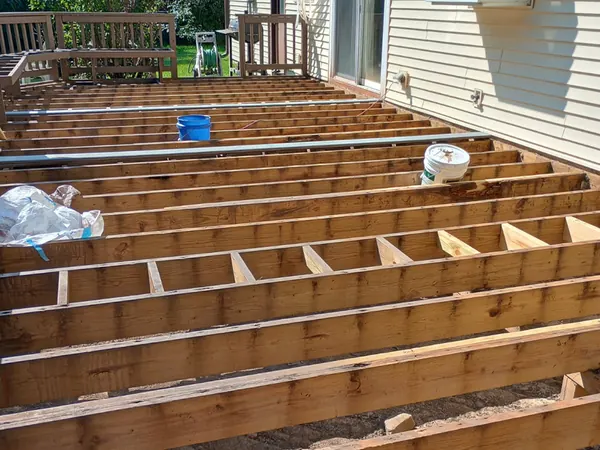
The old boards, rails and stairs come up first, and we haul them away. With the frame bare we can see everything: joist ends, hangers, the ledger connection, and the posts. Anything that is sound stays. Anything that is not gets replaced. If the ledger is being replaced, we flash it where it meets the house, since water behind the ledger is what rots the rim of the house itself.
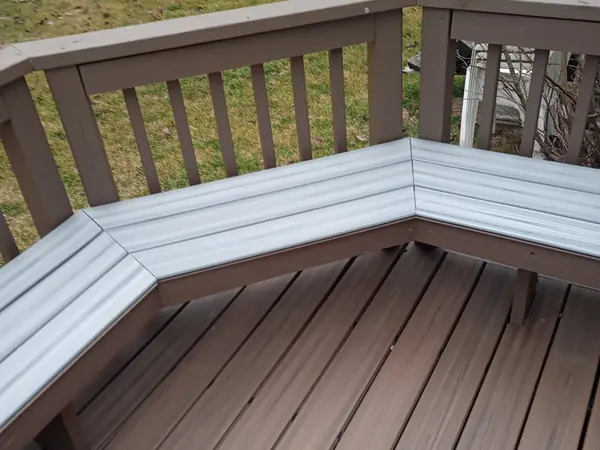
Then the new decking, rails and stairs go on. Stairs are where people get hurt on old decks, so we build them with even risers and a solid handrail.
Permits for a rebuild
In Indianapolis, a deck with no part of the floor more than 30 inches above finished grade is exempt from permitting; higher decks need one. In Greenwood, any deck larger than three feet by three feet needs a permit. We check with the right office for your address before the tear-out.
Deck replacement questions
If the frame is sound and the joist spacing works for composite, yes. Composite often needs closer joists than the wood boards it is replacing, so we check before we promise it.
It can be, or bigger. A rebuild is a good time to fix a deck that was always too narrow for a table, or to add benches and planters.
We can. With the deck boards up, it is the easiest time to fix a rotted threshold under the door. See door installation.