
The stain is almost never under the leak
Water that gets through a roof does not fall straight down. It runs along the underside of the shingles, across the decking and down the rafters until it finds a low spot, and that is where it shows up on your drywall. A brown ring over the hallway can start six feet up the slope, at a vent or a valley.
So we do not patch the spot above the stain and hope. We go up, look at every roof penetration and change in plane above the wet area, and when we can get into the attic we follow the water marks on the wood back to where they start. Then we fix that.
Where roofs on the south side usually fail
In our own ZIP code, 46227, half the houses were built before 1971. On roofs that age, the same handful of spots account for most of the leaks we trace:
- Pipe boots. The rubber collar around a plumbing vent dries out and cracks long before the shingles around it wear out. It is one of the cheapest repairs on a roof and one of the most common.
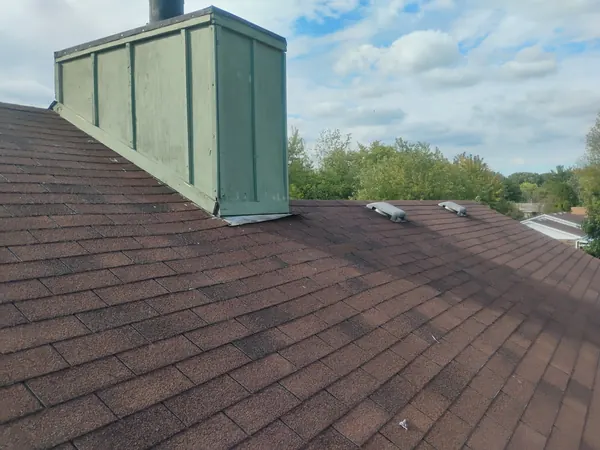
- Chimney flashing. The metal where the chimney meets the roof gets bent, loosened or sealed over with tar that has since cracked. We rework the flashing rather than smear another layer on it.
- Valleys. Two slopes dump their water into one channel. Worn shingles there, or failed ice and water shield under them, will leak in every hard rain.
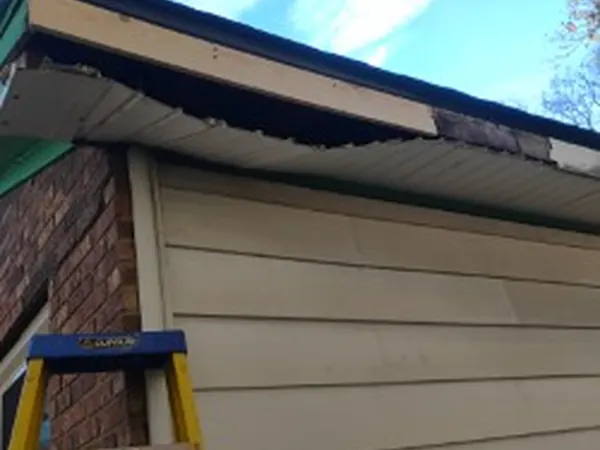
- Wind-lifted shingles. Once the seal strip lets go, the next storm peels the tab back or takes it off. The ridge and the rake edges go first.
- Wall and dormer flashing. Where a roof runs into siding, like the dormer in the photo above, the step flashing has to be tucked behind the wall covering. When it is not, water runs behind the siding.
Matching new shingles to an old roof
A repair should blend in. We match the shingle style and color as closely as we can, and when an exact match is gone from the market we tell you before we start, so you can decide whether a slightly different shade on the back slope bothers you. We install Owens Corning and CertainTeed shingles, and between them most of the colors on the south side are still available.
Where a few tabs are missing, we slide new shingles in, nail them under the course above and reseal the row. Where the decking under the leak has gone soft, we cut out the bad section and replace it, because shingles nailed into wet wood will not hold.
When we will tell you to stop repairing. If the shingles are curling or losing granules across whole slopes, or if you have had leaks in three different places in two years, patching becomes money spent on a roof that is finished. We will show you the photos and walk you through what a full roof replacement involves. If a hail or wind storm caused the damage, start with storm damage and insurance claims instead.
Repair questions
Yes. Storm damage calls are answered 24/7. If water is coming in and it is not safe to do the repair yet, we tarp the area to hold it until we can fix it properly.
Often, yes. A cracked pipe boot or a bad flashing joint can be the only thing wrong with a roof that has years left in it. We tell you honestly whether the rest of the roof is sound before you spend money on the repair.
No. The inspection and the written estimate are free. Seniors, veterans and people with disabilities also get 10% off the repair.
A small repair usually does not reach the permit thresholds. Greenwood, for example, only requires a roofing permit when 25% or more of the decking comes off. If your repair grows into something bigger, we sort out the permit for your city before we go further.