
Signs your gutters are done
- Water sheets over the front edge in a hard rain, even when the gutters are clean. The runs are too small for the roof, or there are not enough downspouts.
- Sags between hangers, so water pools in the low spots instead of running to the outlet.
- Leaking seams and corners that drip onto the same spot of sidewalk or mulch every storm.
- Gutters pulling away from the house, which almost always means the fascia board behind them has rotted and the fasteners have nothing to grip.
- Peeling paint, stains or soft wood on the fascia and soffit, or water marks on the foundation below.
A home inspectors' life-expectancy chart gives aluminum gutters roughly 20 to 40 years. In our ZIP code, 46227, half the houses were built before 1971, so plenty of south-side homes are on original or second-generation gutters that have simply worn out.
Fascia and soffit come first
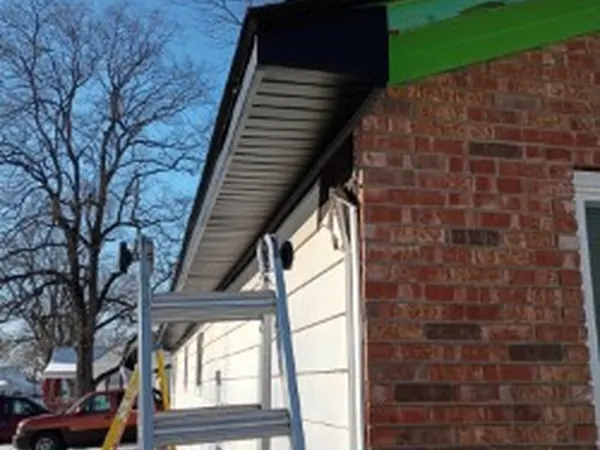
The fascia is the board along the roof edge that the gutters fasten to. The soffit is the underside of the overhang. When a gutter overflows for a few years, the water soaks both. Hanging new gutters on rotten fascia is a job that comes loose the first winter.
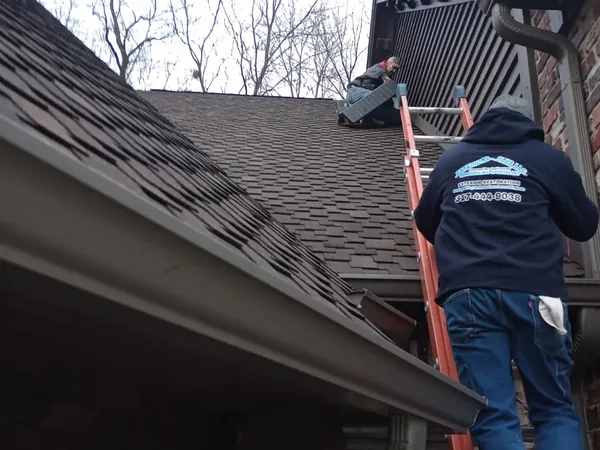
So on most gutter jobs we pull the old runs, probe the fascia, cut out and replace any soft boards, and then wrap the fascia in metal so it never needs paint again. Where the soffit is stained or sagging, we replace it too. Only then do the new gutters go up.
Soffit does a second job most people never think about. On many houses the soffit is where fresh air enters the attic, and that air keeps the roof deck drier and cooler. When old soffit gets painted shut or replaced with solid panels, the attic loses its intake. When we replace soffit, we look at how your attic breathes and keep the intake open.
Where the water goes after the downspout
A gutter's whole job is to put roof water somewhere other than against the house. We place downspouts where the roof actually sheds the most water, not just at the corners that are convenient, and we turn the outlets away from the foundation. On houses with a basement or crawlspace that stays damp, that part of the job matters as much as the gutter itself.
If you are also replacing the roof, it is the cheapest moment to do the gutters, because the roof edge is already open and the new roof replacement gets fresh drip edge along every eave anyway.
Permits. The Indianapolis homeowner permit guide lists gutter replacement and installation as exempt from permitting. If hail dented your gutters, they belong on the same insurance claim as the roof. See storm damage and insurance claims.
Gutter questions
If the fascia is solid, yes. We check it when the old gutters come down. If it is soft, we will show you before we replace it, because new gutters will not hold on rotten wood.
Both. A loose hanger or one leaking corner is a repair. Sagging runs all the way around, or gutters that were undersized from the start, are a replacement. The estimate is free either way.
The wood fascia board is covered with bent metal trim, so rain and sun never reach the wood. It stops the cycle of scraping and repainting the roof edge every few years.